Palestine

Other posts from Palestine
Hebron is a city under intense occupation. Under an oppressive cloud of darkness, the people still shine through.
Our first afternoon after arriving in Al-Khalil (Hebron) in the West Bank, we sat on the roof of the CPT office in the old city with two CPT staff, Ameera and Shahd. In clusters amongst the old stone buildings, rise blockier structures which house Israeli settlers. The first Israeli settlement in the area, Kiryat Arba, was built outside the city in 1968, shortly after Hebron came under Israeli control at the end of the 6-day War. This settlement was established as part of a secret government plan in which Palestinian land was expropriated for “military use,” before housing was built and turned over to settlers. This plan, an open secret throughout the 1970s, was confirmed in a 1970 government document obtained by Haaretz, which detailed how the plan was used to build settlements in violation of international law.
Over the subsequent years, countless more settlements have cropped up in surrounding areas and directly within the city. Most settlements are visually distinct from Palestinian homes and businesses because of their many Israeli flags, more modern facades, and the lack of water tanks on their roofs. They are also surrounded by razor wire, cameras, and military watchtowers. When new settlements are built, surrounding roads are designated for sole use by Israeli citizens, expediting travel between settlements, while cutting off Palestinians from their usual travel routes.
The CPT office is directly abutting one of these settler roads, and as we peered over the roof’s edge, Ameera pointed out a Muslim cemetery on the other side. Visiting a relative’s grave requires about 30 minutes to reach when previously it simply involved crossing the street.
The occupation is designed to impede the normal flow of Palestinian life. To simply go to school, buy groceries, make it to a doctor’s appointment, or visit a relative’s home may entail circumnavigating the city, and crossing one or more military checkpoints along the way, where you could be turned away or delayed, (or even sexually harassed). Under the occupation, nothing is predictable or convenient. It requires maximum flexibility. In addition, it requires hypervigilance.
Over our first few days in Al Khalil, our hosts explained to us a complex set of instructions to stay safe. You can go on the roof, but make sure there are no drones or soldiers around on nearby rooftops. Don’t take pictures too close to checkpoints, don’t take pictures of soldiers or when soldiers are watching you. Avoid wearing clothing or jewelry expressing support for Palestine when crossing checkpoints. Be careful when walking on restricted roads, because settlers drive aggressively without regard for pedestrians. It is best to avoid eye contact with settlers and soldiers . . . that is what works best for us.
We had a variety of interactions with soldiers and border police while crossing the Israeli border from Jordan, crossing checkpoints (and not crossing them, because we were denied), and being cleared from an area to make room for Israeli settlers to move through. Some soldiers ask friendly questions about how we are doing, smiling at us foreigners during the interaction, others perform their job with a cold detachment, and others employ aggression and intimidation. Under the occupation, your experience and safety depend not on the law, but on the soldier’s mood.
This is especially true since the war in Gaza. Since October 7th, Israeli troops act with impunity, clamping down on all forms of resistance. While observing and documenting schoolchildren crossing checkpoints during their morning commute to school, another CPT staff member, Bahaa shared about the clashes that previously occurred at this particular checkpoint. Before October 7th, there were semi-frequent clashes in which children threw stones at the checkpoints and soldiers responded with teargas. Although this no longer occurs, it is not because there is peace, but rather repression.
As we stood there watching the children pass through on their way to school, Bahaa pointed out a man sitting a few yards further down the street. That man was hired by parents to monitor their children and prevent them from agitating the soldiers. Since October 7th, the previous clashes could now result in shootings or arrests and many of the children are too young to grasp the consequences of their actions. Parents are unable to personally accompany their children across the checkpoint, as access has been restricted in the aftermath of October 7th. Now only students, teachers, and other adults with express permission can cross that checkpoint. (Although the CPT office is a few minutes’ walk from the checkpoint, we took a taxi around the city to access the other side.)
Under this threat of reprisal, the Palestinian people are being subdued. They fear wearing political clothing, making political statements on social media, or being involved in activism due to the threat of arbitrary arrest and violence. In the year since October 7th, 721 Palestinians were killed in the West Bank, amid a rapid escalation of violence from Israeli soldiers and settlers. In contrast, 259 were killed in the 12 months prior, which was the highest on record since the United Nations Office for Coordination of Human Affairs (OCHA) started reporting West Bank casualties in 2008. In addition, there is an increased threat of imprisonment regardless of a crime being committed. Israel employs a practice called administrative detention, which allows Palestinians to be imprisoned without charge or trial indefinitely. As of June 2024, there were 3,377 administrative detainees, a number that has nearly tripled since before the war in Gaza according to the Israeli Prison Service. The people are acutely aware of these threats, and everyone has people close to them who have been personally affected.
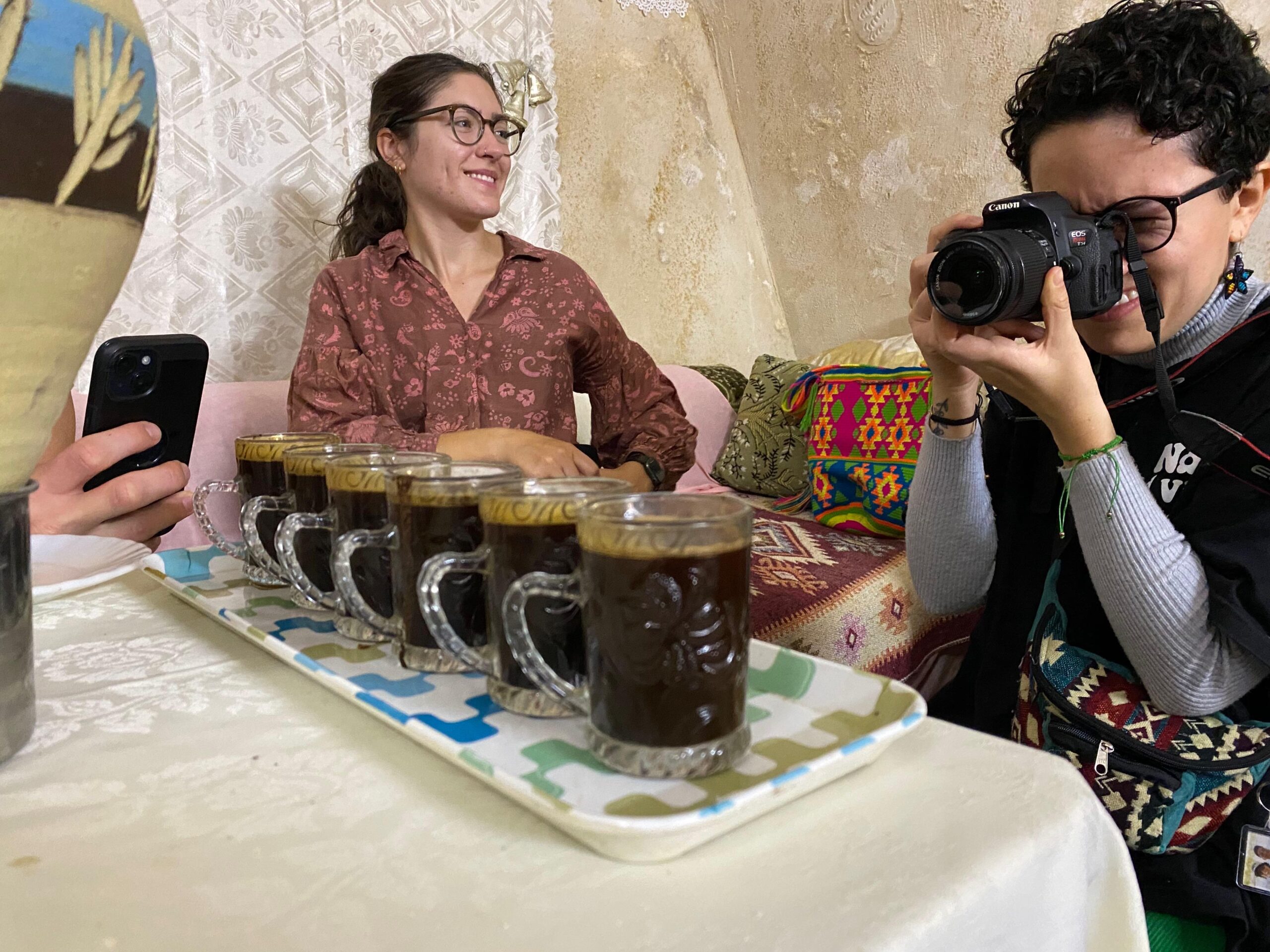
Despite all of this, the Palestinian people are full of love and life. Walking the narrow streets of the old city, we are invited into neighbor’s homes and shops for coffee. Small children shyly practice their English and give out handshakes. Random passersby greet us and welcome us to Hebron. An elderly woman living alone in a single-room home directly adjacent to a checkpoint in the restricted area, after recounting the various methods of harassment, humiliation, and persecution she had faced, finished with, ‘Thank God for everything. I am still alive. Why would I not smile?”
CPTer Ameera cheerfully recounted a time she was on the rooftop when a drone descended nearby, and a voice started talking to her and demanding that she leave the area. She was laughing at imagining some young guy sitting up in a tower and playing with the drone like a videogame, and at the audacity of that demand. Over and over, these demands, incessant questions, and arbitrary and changing sets of rules are designed to instate a sense of powerlessness and humiliation. But how preposterous to think the Palestinian people could be broken.
As CPTer Bahaa said, “We are Palestinian. Day after day we become more strong . . . No one in the world can live like this.”
—
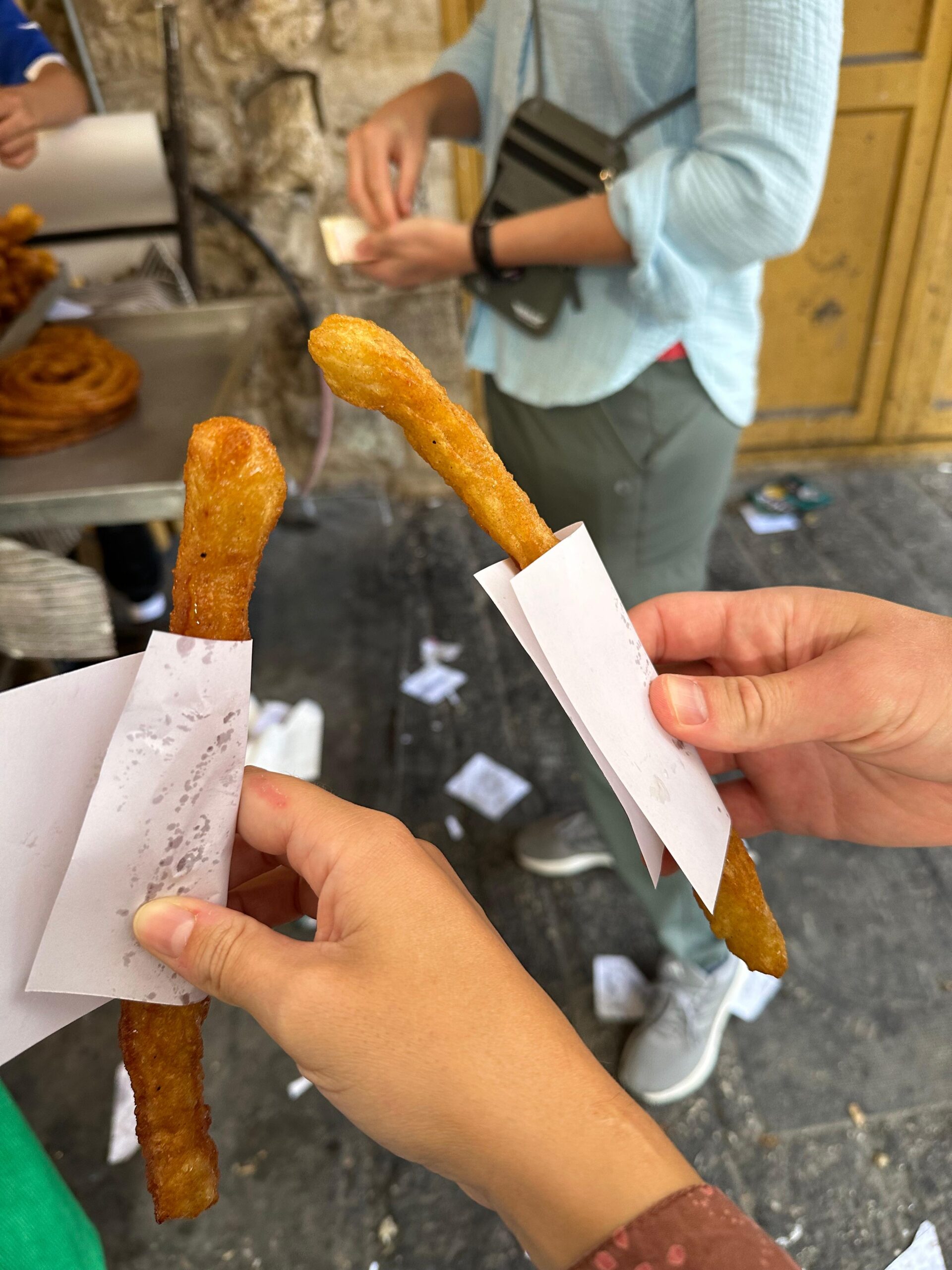
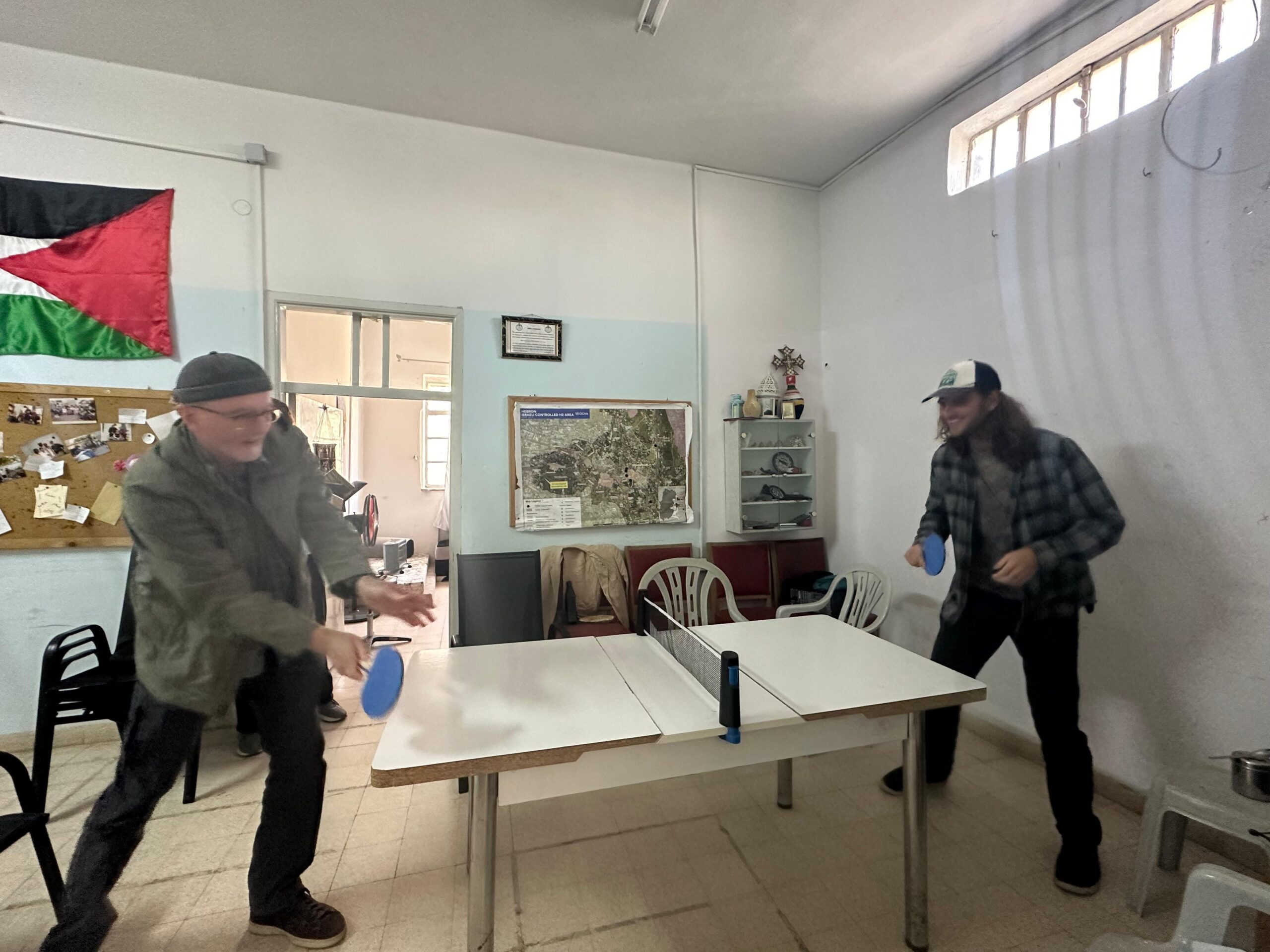
Many Palestinian people don’t like having their picture taken and posted for understandable reasons. So, while we’ve seen many friendly smiles from them, we don’t have photos to post here. But here are a few photos showing the simple joys of life that can still be found here.




Leave a Reply