
In October, we joined a two week peacemaking and solidarity delegation with Community Peacemaker Teams (CPT) to Iraqi Kurdistan.
In upcoming posts, we will share stories from our travels around Iraqi Kurdistan (IK). To give background for those stories, here we share a brief outline of the history and politics of the region. We have learned much in the last two weeks, but even if we spent years here, we would be far from experts. This post serves a summary of only key information to provide context for the stories to come.
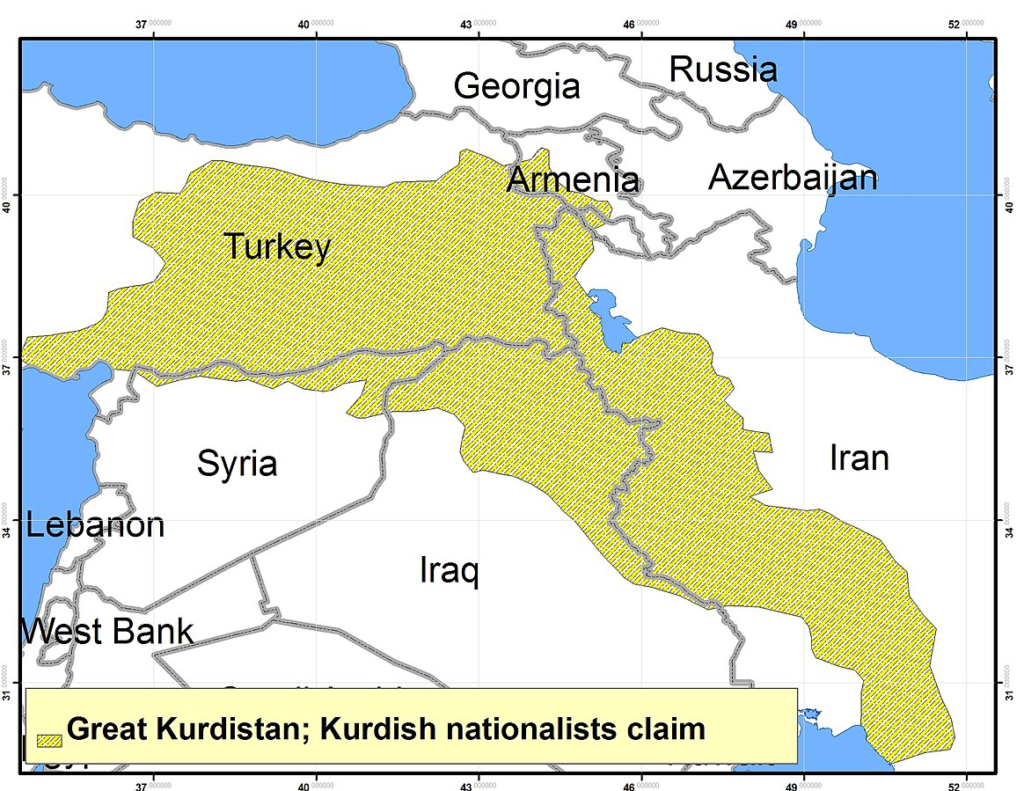
Today, Kurds are the largest stateless nation in the world, consisting of 30 – 45 million people. They are a majority Sunni Muslim people that includes other religions (Shia Muslim, Christian, Jewish, Yazidi, Yarsan, Kakey and Zoroastrian). The Kurds we met gave us the sense that they identify most strongly with Kurdish identity rather than their identity as Muslims or Iraqis.There are many other ethnic groups in Kurdistan including Arabs, Turkmen, Assyrians, and Armenians.
- 1916: The Sykes-Picot agreement between Britain and France drew borders in the middle east, forming the basis for present-day Turkey, Syria, and Iraq, Lebanon, and Palestine. In the process, Kurdistan was split into 4 parts in Turkey (Bakur/North), Iraq (Bashur/South), Syria (Rojava/West), and Iran (Rojhelat/East).
- 1916 – 1980: We will pick the history back up in the 1980s. In the intervening years, there were a few developments that are important to the stories we will tell about present day Iraqi Kurdistan:
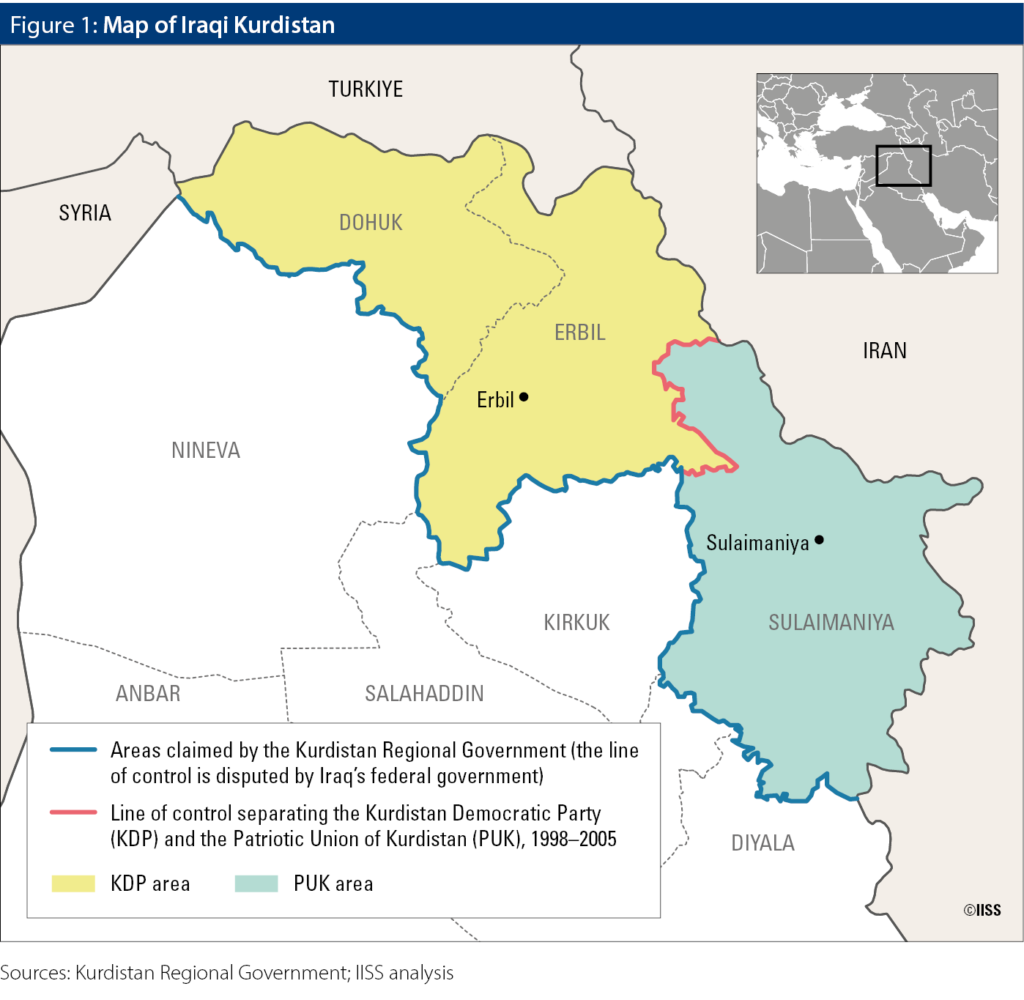
- Two political parties (KDP and PUK) came to dominate Iraqi Kurdistan politically. Military control of IK is also split between these two parties — there is a KDP zone and a PUK zone which are maintained regardless of how individual cities vote. Of course political opinions of the people vary widely, but the common theme that we heard is that both of these parties are controlled by corrupt families and primarily act as proxies for larger regional powers; KDP as a proxy for Turkey, and PUK as a proxy for Iran.
- In these years, the Turkish government also began to suppress Kurdish language and culture, claiming that in Turkey there is only one nation and one language. In this environment, a Kurdish political group, the PKK, began to grow. The PKK eventually developed armed guerrilla groups and gained influence in all parts of Kurdistan. Again, opinions vary, but many people we talked with held more favorable views of the PKK and saw them as fighting for Kurdish rights and freedom.
- Two political parties (KDP and PUK) came to dominate Iraqi Kurdistan politically. Military control of IK is also split between these two parties — there is a KDP zone and a PUK zone which are maintained regardless of how individual cities vote. Of course political opinions of the people vary widely, but the common theme that we heard is that both of these parties are controlled by corrupt families and primarily act as proxies for larger regional powers; KDP as a proxy for Turkey, and PUK as a proxy for Iran.
- 1980s: In the ’80s Turkey started to conduct cross-border military operations – bombing villages in Iraqi Kurdistan as part of the conflict with PKK and causing high numbers of civilian martyrs and injuries. Besides casualties and injuries, this bombing has also displaced many people from rural areas.
- 1980 – 1988: During the Iran-Iraq War, Kurds were caught in the middle. Accusations of aiding the other side became the pretext for massacres including the Feyli Genocide with a death toll of ~25,000 Feyli Kurds, and the Barzani massacre of 1983 which killed about 8,000 Kurdish men (both massacres committed by Saadam Hussein’s Ba’athist regime).
- 1988 – Anfal: International silence about these war crimes emboldened Saddam Hussein’s regime to execute a genocide against Kurdish people, murdering and disappearing 180,000 Kurds, and destroying 4,040 villages. It was not known what happened to the majority of the victims until mass graves were discovered in 2003.
- 1991: Uprising of Kurds against Saddam’s regime in the aftermath of Iraq’s defeat in the First Gulf War. The US had promised support for the uprising but did nothing when Saddam Hussein tried to crush the uprising with tanks. One million Kurds fled to neighboring countries, many dying on the journey. Eventually the UN implemented a no-fly zone, and Kurdish forces regained control, leading to the establishment of the semi-autonomous Kurdistan Region of Iraq.
- 1996 – Civil War: With the KDP and PUK struggling for power in the new Kurdistan Regional Government, the KDP invited Saddam Hussein’s regime to side with them and come back into IK with tanks, forcing the PUK to flee toward Iran. This is called the Betrayal of August 31st. The PUK later returned to take back territory with Iran’s support, leading to an internal border between KDP and PUK. On our travels through the countryside, we passed through many checkpoints manned by the security forces of one party or the other.
- 2003: The US invasion of Iraq toppled Saddam Hussein’s regime. The recruitment of Kurdish men into the army that fought Saddam Hussein emptied many villages and created a dependence on food grown overseas. The huge influx of investments in the oil industry fueled immense corruption and the division of economic gains between the two dominant political parties. Some portion of extracted wealth is spread among the common people, primarily through jobs in the military, security forces, and the oil industry. This has further destroyed local economies and self-sufficient villages, helping to cement dependency on the two parties that control the flow of oil money.
- 2014 – 2017: The Islamic State (called ISIS or Daesh) took over large swaths of territory in Iraq and Syria. They were defeated in 2017 by coalition forces, with Kurdish forces on the front lines. ISIS terror led many Arab Iraqis to seek refuge in Iraqi Kurdistan. Kurds also faced many tragedies, including the Sinjar massacre and genocide of Yazidis. This genocide of Yazidis was enabled by the offical Iraqi Kurdish forces withdrawing from protecting the Yazidi city of Sinjar; it was the PKK that stepped in to protect fleeing Yazidis.
- 2013 – 2015: Two and a half year peace process between Turkey and the PKK which ultimately broke down.
- 2015: Turkey carries out first unmanned drone bombardments in Iraqi Kurdistan.
- 2017: Turkey initiates land operations in Iraqi Kurdistan, establishing military bases within Iraqi borders. Turkey now has 139 military bases as far as 45 kilometers into Iraqi Kurdistan territory.
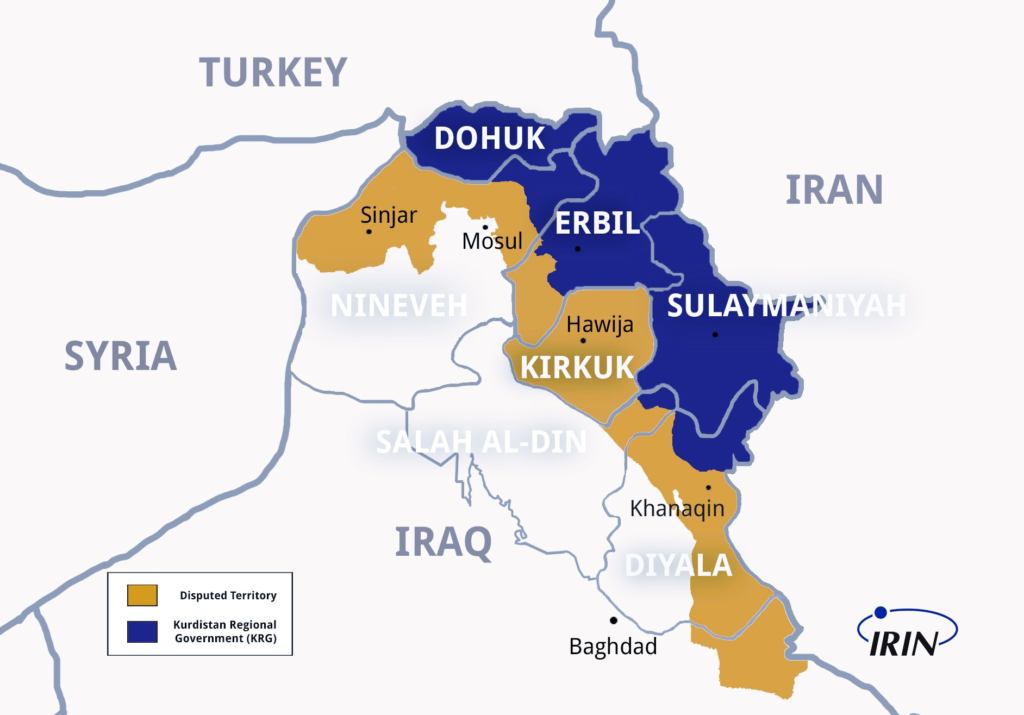
- 2017: Kurdistan Region independence referendum gains over 90% approval for Kurdish independence from Iraq. The referendum’s legality was rejected by the federal government of Iraq. This led to a military conflict with the Iraqi central government, in which the Kurdistan Regional Government lost 40% of its territory, including its main source of revenue from the Kirkuk oil fields. Since this time, government employees such as school teachers and Kurds who have been displaced and disabled from bombardments have struggled and rarely succeeded in receiving the salaries and compensation that they are entitled to from the Iraqi government.
- 2025: In February this year, the long imprisoned PKK leader Abdullah Öcalan called on the PKK to lay down its arms, saying that they have achieved what is possible militarily, and now is the time to turn to political struggle. Three days later, the PKK announced a unilateral ceasefire. From February to June, Turkish attacks increased, and then dropped dramatically until September became the 1st month since 2015 with no cross border attacks recorded. There is cautious hope in the border regions as people have reasons to believe that this peace process will turn out differently than the last. However, it has been a cold peace as both Turkey and the PKK have continued to mobilize and expand their military presence in the area. While there haven’t been attacks in the last two months, this ongoing militarization has led to persistent restrictions on civilian movement—with some areas still experiencing complete obstruction—as well as continued displacement.
While the Kurdish story is full of tragedy and oppression, it is also full of joy, resistance, and hope. Some people talked with us about their hopes of returning to their villages, being reunited with family, having the crimes committed against them officially recognized, and meeting their martyrs in heaven. Others talked to us about big political hopes. While many Kurds hold on to the dream of an independent Kurdish state, many others believe that nation-states structurally favor people of the national majority over minority groups and they instead call for all groups to have equal rights and autonomous control under a confederal democratic system that is beyond state power and violence.
In coming updates, we will share stories from people we met travelling around the country, including their past and ongoing tragedies and joys as well as their hopes for the future.
Leave a Reply